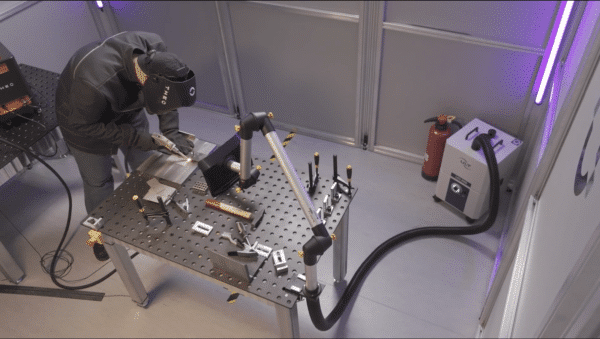
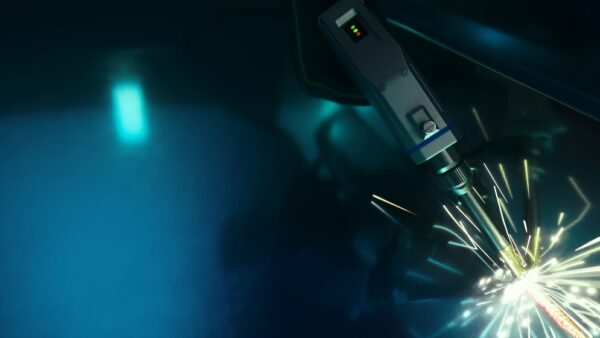
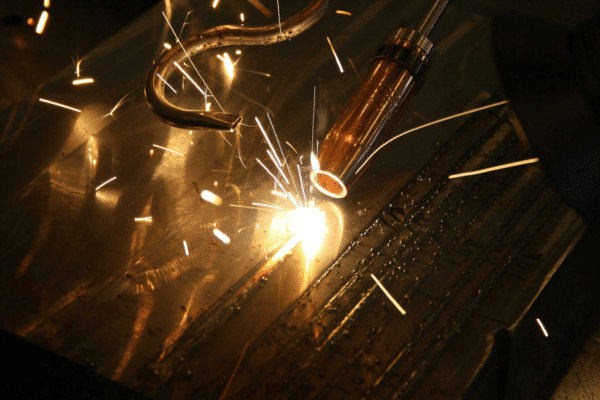
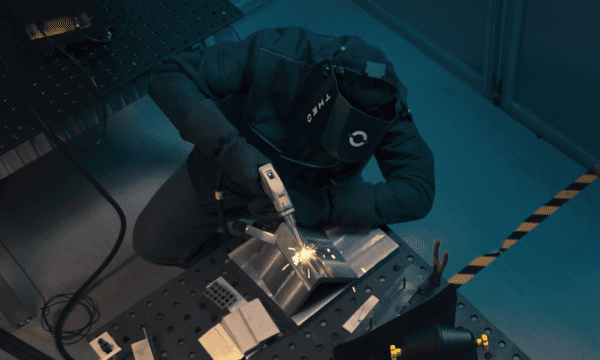
If you weld for a living, a healthy dose of doubt is an asset, not a flaw. So, when a handheld laser welding machine promises to weld many times faster with far less heat and hardly any training, your quick response is “prove it”.
These are the questions most skeptical buyers ask before trusting a laser welding machine. Here are the honest answers, and why, once you follow the doubt all the way through, it tends to land on the machine’s side.
Start from the doubt, not the pitch
The pitch usually sounds too clean: faster, cooler, easier, cheaper to run. Real shops don’t get all four for free, so assuming there’s a catch is the smart instinct. The difference here is that the catch is small, the wins are large, and the evidence is checkable. Take each doubt in turn and see where it actually leads.
1. Is it really as fast as the number on the flyer?
Mostly yes, and even a heavy discount leaves you well ahead. THEO’s figure is up to 10 times faster than TIG or MIG. Treat “up to” as the ceiling rather than a promise for every joint. But cut that number in half, then in half again, and a laser welding machine is still a clear step change on the fabrication most shops run day to day.
The speed isn’t a trick of a staged demo. It comes from the process itself: a fast, continuous weld without the constant stop-start of feeding filler and chasing the puddle. That’s why it holds up on real parts, not just a polished showpiece. Run it on a joint you’d normally dread and watch the clock. The number tends to survive in contact with your own work, and that is the only proof that counts.
2. Will all that speed cook my parts?
No, and this is where laser turns the usual “fast means hot” assumption on its head. It’s also the doubt with the strongest evidence behind it, and that evidence isn’t ours.
A study by Jahn, S. et al. at IWF Jena examined how beam oscillation (the “wobble”) moves heat through the weld pool. Concentrating energy in the center of the pool, rather than at its outer edges, delivered maximum penetration with a minimum heat-affected zone (HAZ). Put plainly: a fully penetrated, sound weld with far less surrounding metal overheated. If you’ve ever watched thin stainless warp and buckle behind a torch, that’s the fear answered directly, not sidestepped. Less heat in the part means less distortion, and less distortion means less time lost to straightening and grinding on the back end.
3. Is the weld actually strong, or just pretty?
It’s actually strong. A clean-looking weld that fails under load would be worthless, so the real question is whether this is a characterized process or a lucky pull of the trigger. It’s the former, and there’s data to prove it.
THEO ran shielding-gas studies with Messer Group on stainless steel (AISI 304), comparing argon, nitrogen, and argon/hydrogen mixes across pore formation, penetration, and brittleness. The results were specific: nitrogen gave the highest safety against porosity for pore-free seams, while hydrogen mixes gave the best penetration. You don’t need chemistry to take the point. This is a studied, tunable process with test data behind it, and weld quality rests on the same fundamentals you already command: the right gas, the right settings, a sound fit-up. Nothing about a laser asks you to unlearn what you know about a good weld.
Attends un peu !
At THEO we test material, gas, weld and wire size combinations thoroughly. We create pWPS, so for every weld you have the prefect recipe
4. How hard is it really to learn?
Easier than the eyeroll “minimal training” line leads you to expect, and for a reason that should reassure you rather than threaten you: your experience is the part that carries over.
A laser welding machine doesn’t make your skill worthless. It puts most of it to work. Reading a joint, judging fit-up, telling a good weld from a bad one, respecting fume and eye safety: that judgment is the hard-won part, and you keep every bit of it. What gets easier is the hand work. Much of the puddle control that took you years is handled by the machine and the beam oscillation, and travel speed is more forgiving. For most welders the switch feels intuitive rather than alien, precisely because it builds on instincts you already own.
Here’s the honest part, because a claim of “instant” would be a lie. Fixturing and gap control matter more, since the beam won’t hide a poor fit-up. Laser safety is its own discipline, separate from arc safety, and it isn’t optional. A few habits keep the transition clean for new adopters: start on non-critical parts before trusting the machine with production, hold your fit-up tight rather than leaning on the beam to cover gaps, don’t rush just because the process is fast – let the machine pull your hand – and build safety habits from the first weld rather than after a scare. (Inferred general guidance for new adopters, not manufacturer instructions; follow the supplier’s safety and operating manual.) None of that is a steep climb. It’s a short adjustment sitting on top of the skills you already have.
Introducing THEO Academy

THEO L'Académie est ta ressource de référence pour les connaissances sur la sécurité du soudage au laser. Elle est conçue pour que nos clients et l'ensemble de la communauté des soudeurs apprennent efficacement les pratiques essentielles en matière de sécurité.
Avec THEO Academy, accède rapidement à des conseils d'experts qui améliorent tes compétences et garantissent un environnement de soudage sûr. Reste alerte, reste en sécurité - l'AcadémieTHEO te facilite la tâche.
5. What does it really cost to run?
Less than the process you’re running now, and the savings turn up in more places than the electricity bill.
On energy, THEO’s testing on the MA1 ULTRA (a 2000 W single-mode, air-cooled unit) puts energy use per weld well below MIG, by roughly 70% on 4 to 6 mm material, with a smaller gap on thinner stock. One honest note: the MIG figures in that comparison are calculated based on common public data. So, read them as a well-grounded estimate rather than a certified head-to-head. Even allowing for that, the direction isn’t in question.
You save energy on everyday tasks. Far less finishing means fewer hours lost to grinding, rework and consumables. That’s usually where the margin leaks out of a job. A faster weld that also needs less clean-up compounds in your favor across a full shift. The exact payback depends on your workload, and many more factors such as for example:
- Parts per year
- Vitesse de soudage
- Operator’s Skills
- Post-Weld Cleanup
- Gaz de protection
- Energy Efficiency
- Weld Distortion
So, be wary of anyone quoting a single magic figure. On the kind of work most shops run daily, though, the running-cost case is a strong one.
6. Where does it not make sense?
Here’s the question that proves the rest is honest, because no process wins everywhere, and any supplier who says otherwise is selling.
A laser welding machine is not the automatic choice for very thick, multi-pass structural work, for high-deposition fill on heavy plate, or for jobs tied to a specific welding code or an already-qualified procedure. If your shop is certified and productive on a traditional process for the work you do, “different” isn’t automatically “better.” Naming those limits is exactly why you can trust the wins. And for the work that fills most shop floors, thin-to-medium gauge, small parts, repetitive production, anywhere distortion and finishing time are eating your day, the machine changes the math in a way that’s hard to argue with once you’ve seen it on your own material.
Do you Want to Know More About this Topic?
The Bottom Line for the Careful Buyer
When considering a THEO laser welder, look hard at each worry; the answers consistently hold up, because the welding is genuinely faster on the work most shops run, and it survives real jobs rather than only staged demos. Since the heat stays concentrated where it belongs, the parts distort far less, which is a claim that outside research supports rather than marketing alone. The welds are reliably sound because the process has been studied and tuned, and the learning curve stays short precisely because it rewards the skill you already have. Although the running costs come down noticeably, that saving still sits against a clear and honestly stated set of limits, so none of it asks you to take a leap of faith. Ultimately, this is a decision you can make calmly, with the evidence in front of you.
Now, you’re the only one who can take the last step. Book a demo, we’ll put in touch with one of our local partners, bring a sample along with the job you’d normally dread and let the machine itself answer the final doubt.
Lance-toi dès aujourd'hui dans le soudage au laser
Intégrer un équipement de soudage laser à ton activité peut sembler intimidant, surtout si tu n'as aucune expérience en la matière. Heureusement, nos experts en soudage laser sont là pour t'aider. C'est facile de se lancer : il suffit de nous parler de ton application et de tes besoins. Commence ici
TU POURRAIS ÊTRE INTÉRESSÉ(E) PAR

GAIN DE TEMPS. LA SÉRIE MA1
La machine de soudage laser THEO , c'est un système de soudage laser portable, compact, facile à utiliser et super efficace qui offre un retour sur investissement bien meilleur que les méthodes de soudage traditionnelles.
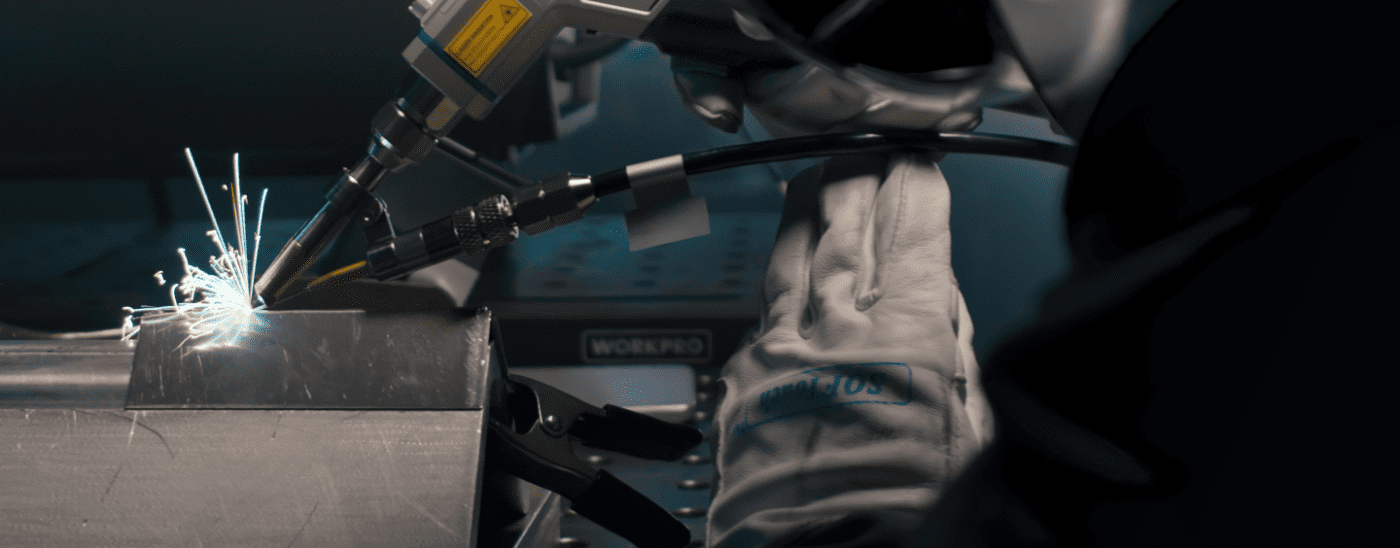
LES AVANTAGES DU SOUDAGE AU LASER. À VOUS DE JOUER
Le soudage au laser, c'est une approche qui change la donne pour assembler les métaux, et qui est plus performante que les méthodes classiques comme le soudage TIG et MIG dans plusieurs domaines clés.
Avec le soudage au laser, tu peux aller jusqu'à 10 fois plus vite, ce qui te permet d'augmenter ta productivité et ta rentabilité.